Exhibition
FUTURAMA Nostalgia for the Future
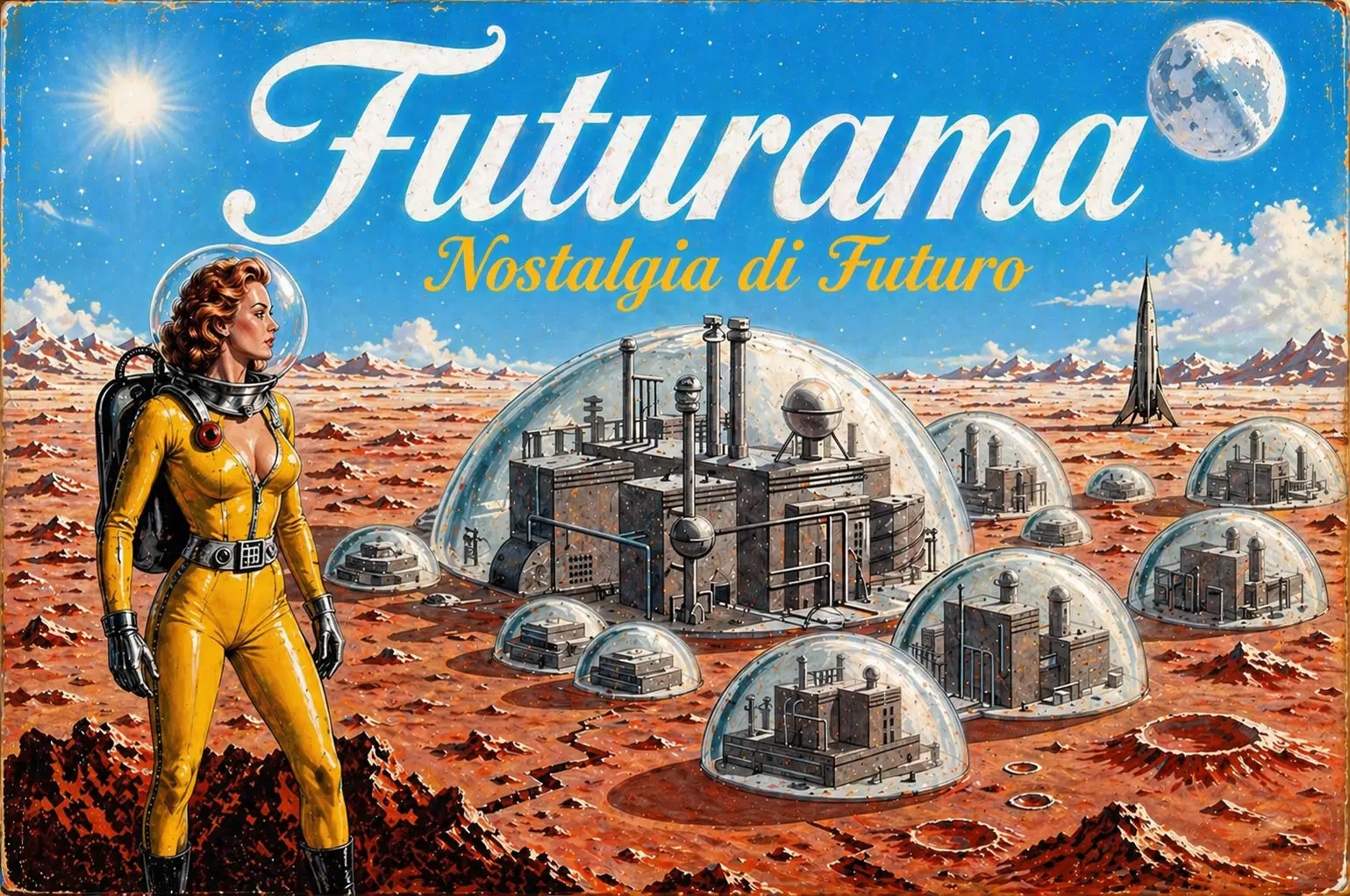
The FUTURAMA project concludes the exhibition trilogy launched by the museum with Sensorama and Diorama, a cycle dedicated to the ways in which human beings construct their relationship with reality, the environment, and time. After addressing perception as a cognitive structure and post-natural ecologies and the relationship between human and non-human, this new chapter focuses on the imagination of the future as a cultural, political, and emotional construction.
The title of the exhibition takes its cue from Futurama, the exhibition organized by General Motors for the 1939 New York World’s Fair. Visited by around five million people, it proposed an idealized image of the America of the future through large-scale models designed by Norman Bel Geddes. In that representation, tomorrow took the form of rational cities crossed by skyscrapers and elevated highways, organized around the automobile and faith in technology. It was an orderly, conflict-free urban model built as a promise of prosperity and control.
The MAN exhibition starts from that vision in order to question the historical period in which progress seemed inevitable and universally desirable. In the postwar period, economic growth, scientific achievements, and technological acceleration fostered a widespread belief in emancipation from material and biological limits. The space race, industrial automation, and the birth of computing contributed to the formation of a collective imaginary based on the idea of a future capable of guaranteeing well-being and development.
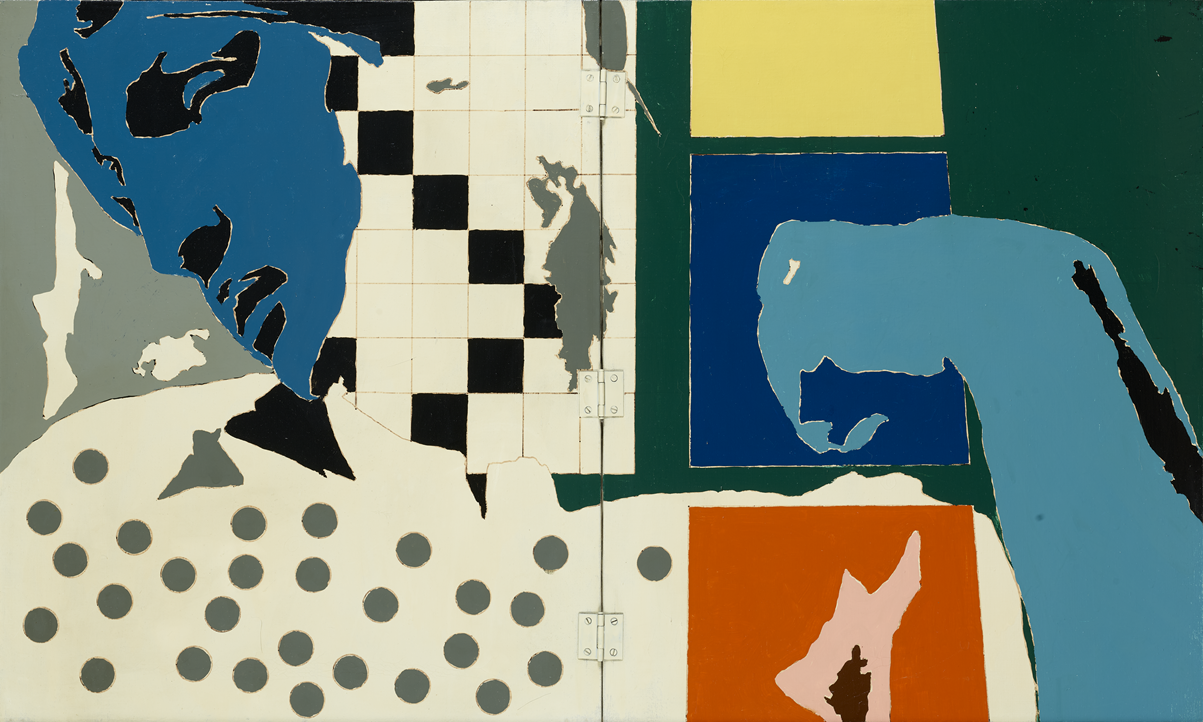
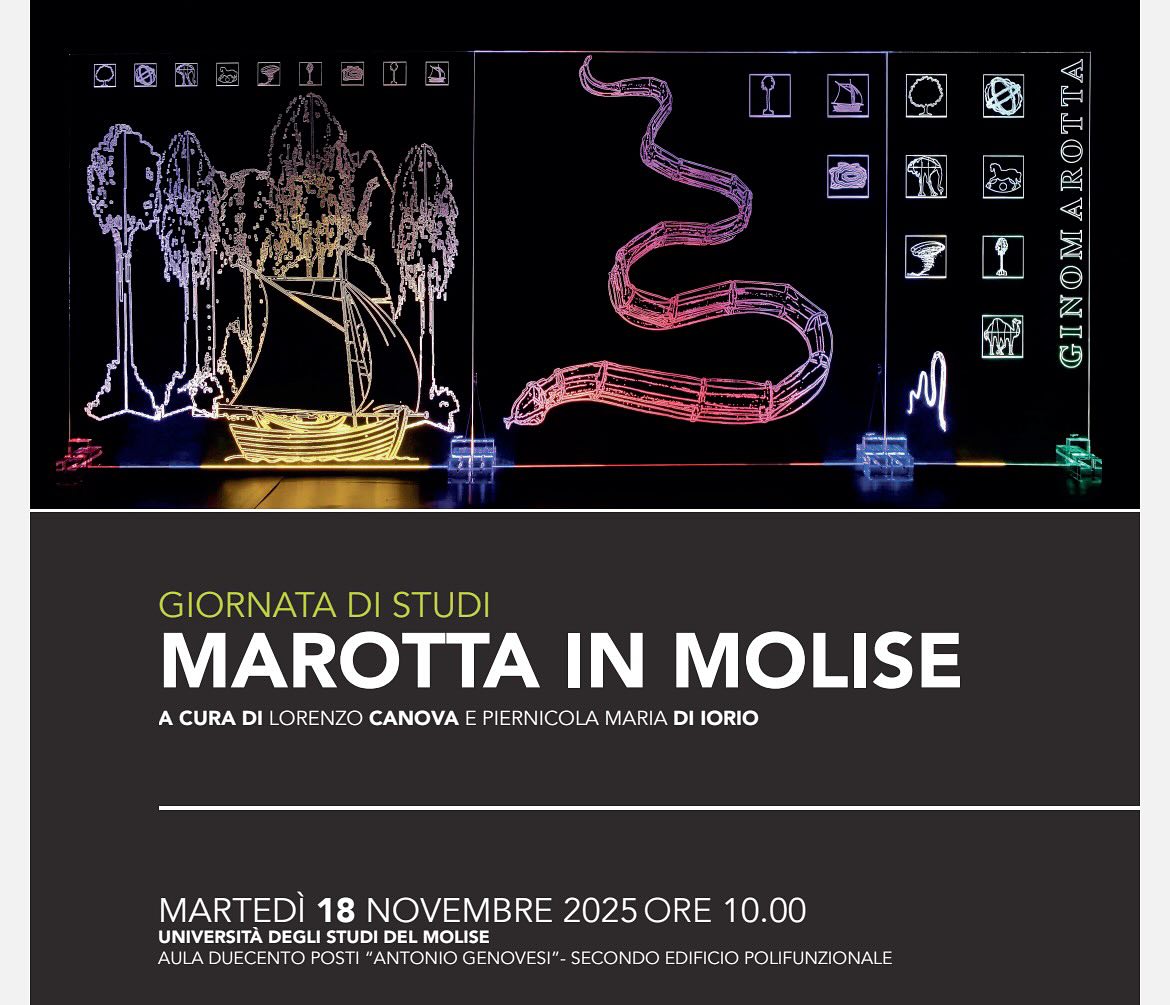
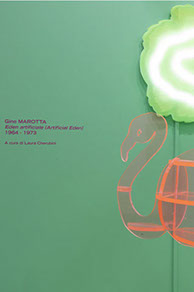
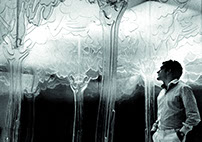
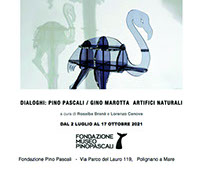
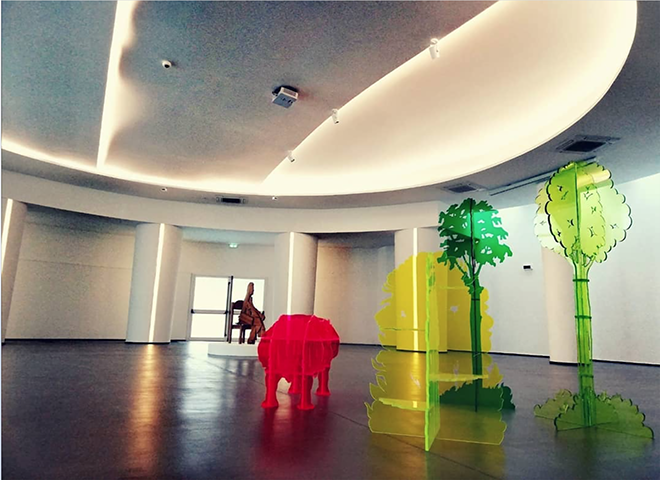
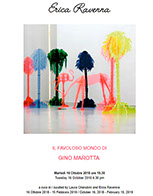
According to the exhibition path, that confidence also translated into a widespread aesthetic of the future that crossed art, design, architecture, fashion, and popular culture. In the visual arts, experimentation involved industrial materials and new conceptions of space. Among the examples cited are Gino Marotta’s methacrylate bestiary, Giulio Turcato’s Superfici lunari, and Lucio Fontana’s Concetti spaziali.
The exhibition thus reconstructs a historical season characterized by a radical faith in progress, interpreted as a true aesthetic utopia. Technology was conceived as a means of liberation from labor, deprivation, and even death. At the same time, the exhibition progressively highlights the contradictions generated by that very model of development. The dynamics that fueled modernist optimism also produced new forms of inequality, alienation, and ecological fragility. According to the curatorial framework, intensive industrial expansion, uncontrolled urban growth, and total reliance on technology generated environmental and social consequences that the utopia of progress had failed to foresee.
Within this context, Futurama reads the present as the expression of a paradox typical of hypermodernity: an age marked by constant acceleration, informational overload, and rapid transformation, capable of generating both enthusiasm and loss of control. From this emerges the concept of “nostalgia for the future,” formulated by the exhibition as an emotional tension toward a better tomorrow in a time marked by uncertainty. According to the curatorial project, this is not nostalgia for the past, but for the loss of that collective faith in change that had shaped much of the twentieth century.
Through a path interweaving technological utopias, aesthetics of progress, and critical visions of the contemporary, the exhibition offers a reflection on the possibility of imagining new future scenarios. Its declared aim is to reopen a space for discussion around the idea of the future as a collective construction rather than merely an abstract or dystopian projection.
Artists featured in the exhibition include Valerio Adami, Vincenzo Agnetti, Enrico Baj, Agostino Bonalumi, Davide Boriani, Fabrizio Dusi, Mario Schifano, Lucio Fontana, Piero Gilardi, Pietro Gallina, Gianni Colombo, Sergio Lombardo, Gino Marotta, Pino Pascali, Giulio Turcato, and Grazia Varisco.
The exhibition will be accompanied by a catalogue with critical contributions by Carlo Antonelli, Paolo Campiglio, and Michela Gattermayer.